

Green councillors in East London are proposing a free local service to help private tenants claw back rent from law-breaking landlords.
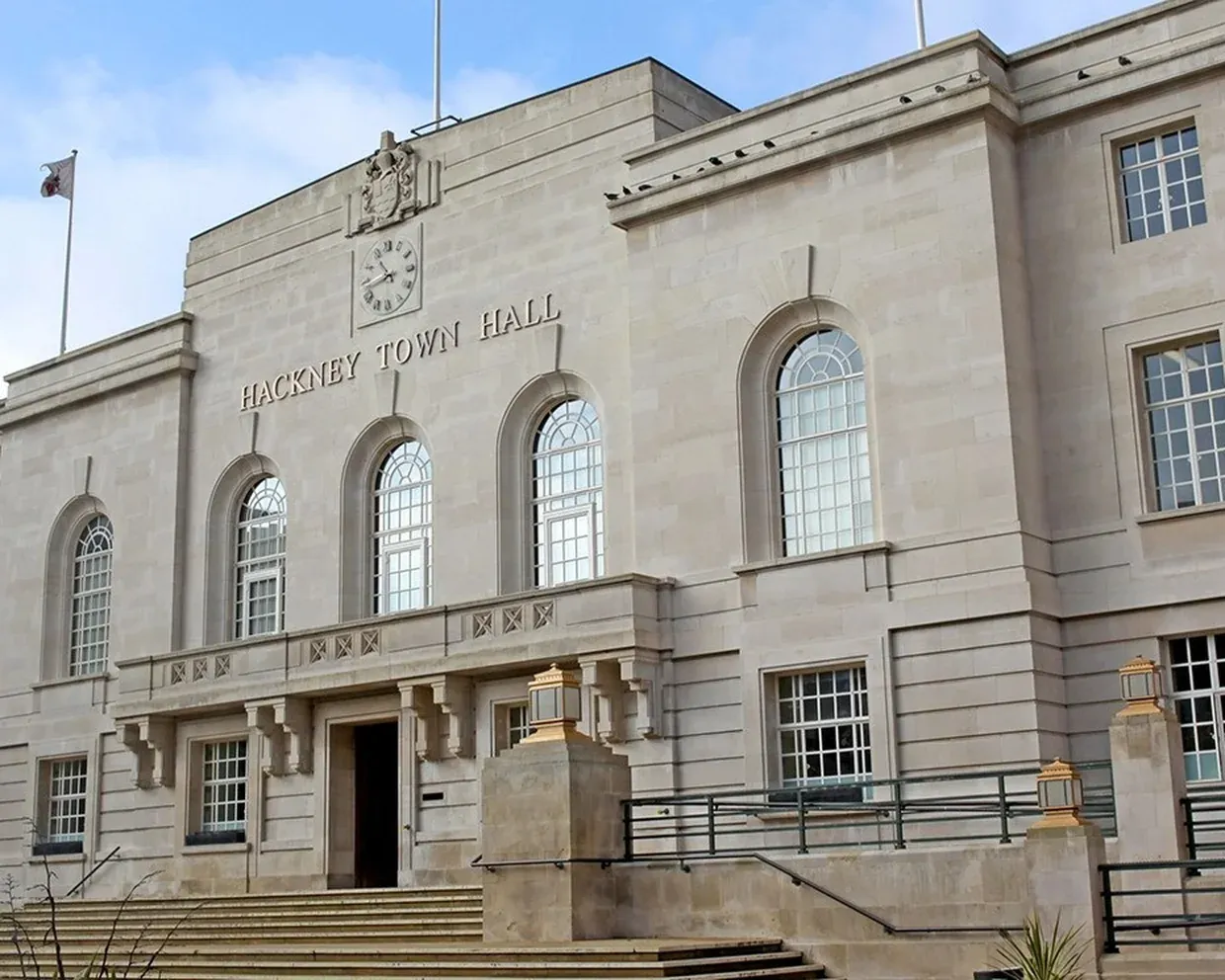
Hackney councillors have urged their local authority to beef up its enforcement of the Renters’ Rights Act to protect residents across the borough’s roughly 34,000 privately-rented households, as council figures show almost £500,000 in landlord fines is still unpaid.
A motion put forward by Green Party backbenchers calls on the borough’s Green mayor, Zoë Garbett, and her cabinet to bring forward proposals within six months for a free service, staffed by experienced caseworkers employed or commissioned by the council, to help private tenants apply to reclaim rent if their landlord breaches renting rules.
“Hackney should be a beacon for private renters, using the Renters’ Rights Act to the full,” the motion states. It adds that the council should take the formal position that “a fine on a rogue landlord is finished only when the renter has been paid back”.
Garbett told the Local Democracy Reporting Service (LDRS) she “wholeheartedly” supported the idea.
“This motion provides renters with systematic support, using council resources to help them get justice,” she said.
What powers do councils have over private landlords?
The Renters’ Rights Act 2025, most of which took effect in England on 1 May 2026, places councils under a legal duty to enforce private renting rules. Councils were given new powers to investigate landlords in December 2025. Older legislation, chiefly the Housing and Planning Act 2016, sets out several enforcement routes for landlords who breach housing law.
Tenants can apply to the First-tier Tribunal (Property Chamber) for a rent repayment order (RRO) if a landlord lets an unlicensed home, ignores improvement notices, or harasses occupiers. They must apply within two years. Criminal courts can issue unlimited fines for serious offences like harassment or illegal evictions.
Local authorities, meanwhile, can impose civil penalties of up to £40,000 for serious or repeat offences as an alternative to prosecution, and keep the proceeds to spend on enforcement in the private rented sector.
Where the council has already fined or convicted the landlord for the offence, the tribunal must normally order the maximum amount, unless there are exceptional circumstances. For offences committed since 1 May 2026, the maximum is 24 months’ rent; for earlier offences it is 12 months.
In May 2026 — less than a week before the Greens won Hackney’s local elections — an expanded property licensing scheme approved by the former Labour administration in late 2025 came into force. It charges landlords £925 for single-let homes in 17 of the borough’s 21 wards, and £1,400 for HMOs.
According to figures given to councillors in answer to a member enquiry, the council issued 83 civil penalty notices (CPNs) to offending landlords between 2021 and 2025, amounting to £643,157 in fines.
During this five-year period, the council collected just over a fifth (£129,890) of what it was owed. A further £17,400 was withdrawn or appealed, leaving £495,867 invoiced but not yet paid. Officers said this sum had not yet been reconciled and that their records “may also not be fully accurate”.
Since the start of 2026, Hackney has collected £24,000, bringing the total amount recouped to £153,890. A table in the same answer gives a total of £160,390, but its yearly figures add up to £153,890.
Because tenants have two years to apply for an RRO, many of those affected by the older fines may now be out of time to claim.
‘We must uphold the law’
Speaking to the LDRS, the motion’s author, Cllr George Sheldon Grün (Green, Clissold), said he was “genuinely inspired” by former Labour housing secretary Angela Rayner, who introduced the bill that became the 2025 Act.

He said: “Right now, you’re more likely to be sanctioned as a benefits claimant than if you’re a landlord harassing tenants. If we oppose lawbreaking and fraud, then residents expect us to uphold the law for everyone, without fear or favour.”
If the motion’s proposals are adopted, with every fine or conviction the council would inform the tenants, whether current or former, that they can claim, by when and how, and give them the council’s evidence.
Caseworkers employed or commissioned by the council could help tenants apply for an RRO and get unpaid orders paid, free of charge.
Cllr Sheldon Grün said the service would eventually pay for itself because it would be funded from 2027/28 by fines on non-compliant landlords, alongside money from RROs.
Although tribunal-ordered rent repayments typically go to tenants, if rent has been paid for with welfare, either partially or in full, a local housing authority can apply for an RRO. A property tribunal can then order the landlord to pay back the benefit element to the council, but only if the authority is an applicant.
Hackney Council has only applied for an RRO once — in 2021, where a claimant partially paid rent with benefits. Officers said the council received just over £3,000 from the case; the amount it claimed was not recorded.
Labour amendments
The Labour group submitted suggested amendments to the motion but chose not to formally move them. The Greens adopted some and rejected others.
The Greens accepted Labour’s proposal to drop a requirement for the council’s enforcement plan to name the officer responsible and the staff and legal support assigned. They also agreed to publish fines and recovery figures yearly alongside the council’s fees and charges schedule, rather than every quarter, and dropped a requirement to publish the number of staff in post. A line saying the free service should not be paid for from council tax was also removed.
However, the Greens rejected Labour’s proposals to limit the letters to “affected” tenants and remove former tenants, to require the caseworkers to be council staff, and to drop the service’s role in collecting unpaid orders.
Officers ‘more than happy’
Senior housing officers argued that it would cost the council more to recover benefit-paid rent from law-breaking landlords than it could expect to recoup.
The council’s finance director further warned that local authorities can only keep Housing Benefit repayments, arguing that statutory provisions mean Universal Credit clawbacks must be remitted to the Department for Work and Pensions (DWP).
This is at odds with the Housing and Planning Act 2016, which says money a council recovers through an RRO does not count as Universal Credit recovered, and with regulations that let councils keep RRO income to spend on private rented sector enforcement. Statutory guidance published in November 2025 also covers councils’ use of RROs.
Officers said they would be “more than happy” to develop the service, but only if it was given £542,400 a year from the council’s general budget on an ongoing basis.
Their estimate covers three caseworkers, a solicitor, a business support officer, a finance officer and four debt collection officers or bailiffs, with extra money needed for items including training, cameras and body armour.
Officers argued that the 27 published tribunal decisions on Hackney homes between January 2021 and October 2026, which ordered £309,477 in total, would not cover a single year of the service. However, almost all of that money went to tenants rather than the council.
The motion’s authors counted 64 published Hackney decisions since 2019, with renters winning more than four times in five.
The council has been allocated £409,592 in one-off government funding to prepare for the Act, of which £110,000 has been committed to consultants and £299,592 is uncommitted. The finance director said the grant could not pay for ongoing running costs.
Another option could be to commission a non-profit group such as Justice For Tenants, to which the council already refers tenants, to provide the support, officers added.
The motion will be debated at Hackney’s next Full Council meeting on Wednesday (25 November).
With additional reporting by Hackney Citizen.
Find out more on these topics


