

An 18-storey tower, dozens of homes and more than 57,000 square metres of office space are set to be built on the southern edge of Shoreditch after the Mayor of London’s office took control of the decision.
Shoreditch Works, a regeneration project set to provide 78 residential units alongside the office space, was approved by City Hall on Wednesday 7 October. Hackney Council planning officers had urged politicians to refuse planning permission.
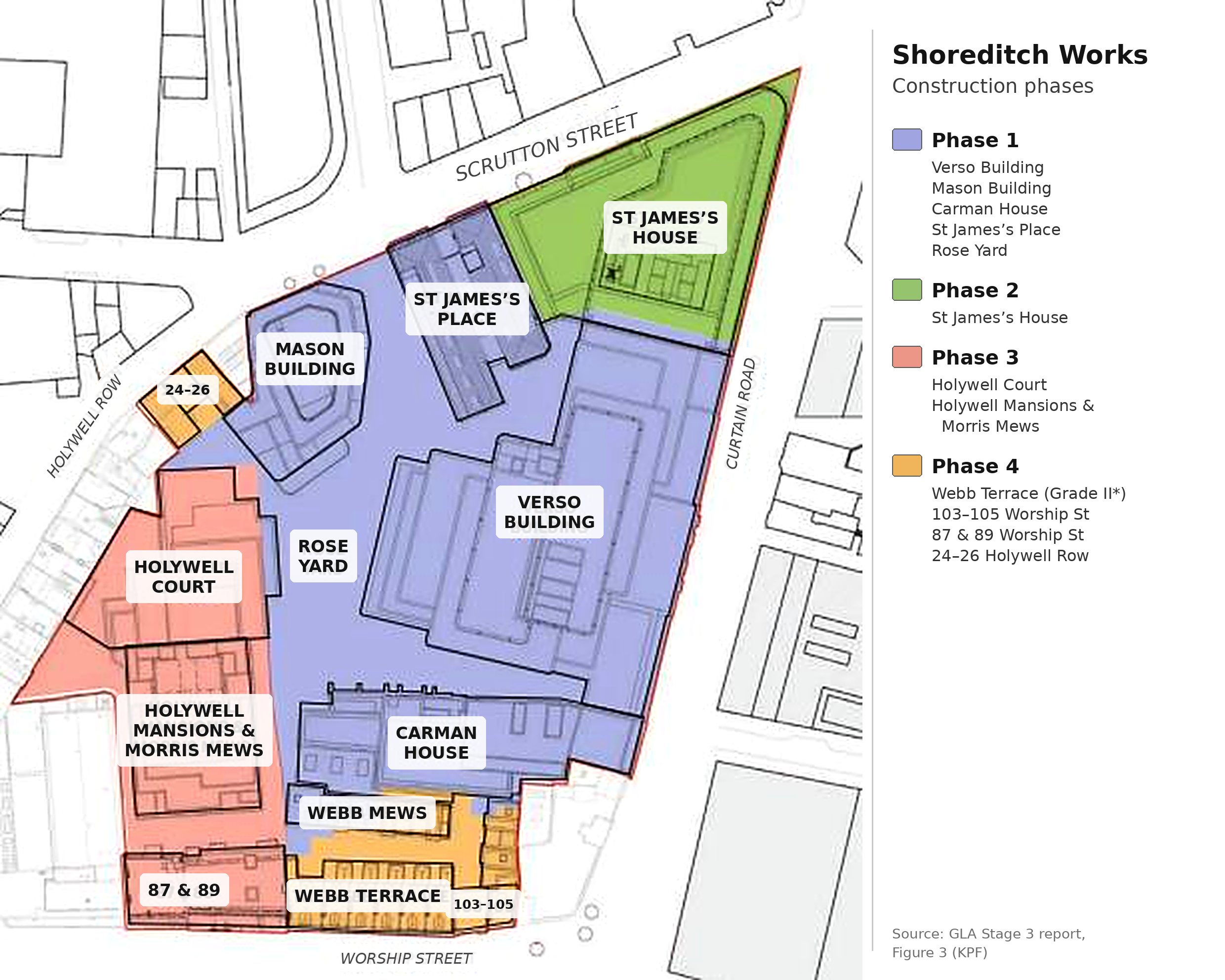
The approved masterplan will build or regenerate 11 buildings across most of a triangular block on the southern fringes of Shoreditch. This includes six new structures between 6 and 18 storeys tall in an area dubbed the capital’s Tech City or ‘Silicon Roundabout’ owing to its prominent cluster of high-tech firms.
Jules Pipe, under his powers as deputy mayor for planning, regeneration and the fire service at the Greater London Authority (GLA), approved the scheme, subject to the signing of a legal agreement with the developer.
‘Clearly and convincingly’
Pipe, who was a directly-elected mayor of Hackney for 14 years, said the development would deliver more than 8 per cent of the jobs planned for the City Fringe Opportunity Area – equivalent to about 55 per cent of the office floorspace targeted in Hackney’s local plan. He also praised plans to open up the site with new public routes and spaces “for the first time in its history”.
On the 18-storey ‘Verso’ tower, he said: “Whilst it would fall outside of a location designated as suitable for tall buildings by Hackney, overall I consider it to be acceptable.” He agreed with GLA officers that the scheme’s benefits “clearly and convincingly outweigh” the harm to heritage.
Delayed decision
The developer submitted plans for the sweeping redevelopment in October 2024, promoting the scheme as “London’s first Regenerative Business Hub”. The mixed-use redevelopment was designed by architects KPF and heritage specialists Richard Griffiths Architects. Roughly two years later, it has the go-ahead.
But the green light from City Hall comes roughly eight months after councillors failed to reach a decision on the scheme at a five-hour planning meeting in February.
Hackney councillors voted 5-2 against council officers’ recommendation to refuse the application. Officers said the scheme would harm local heritage and would not deliver enough affordable workspace, which formed their two reasons for refusal. They also said it fell short of the council’s affordable housing target. Town Hall planners noted that the full application contained a level of detail closer to an outline scheme, and described the high-level assumptions in the developer’s viability assessments as unusual for a scheme of its size.
Called in
Rejecting the officers’ recommendation did not amount to approval, and the committee deferred the decision. Hackney scheduled the scheme to return on 11 March, with officers again recommending refusal. But on 3 March the developer’s planning consultants, Montagu Evans, asked the London mayor to take over the application because the council had not decided it within the statutory time limit. Pipe called it in on 9 March, two days before the council meeting.
Affordable homes and workspace
City Hall secured several new terms in a draft legal agreement with the developer, Linea Properties, in areas which had divided the council. Hackney’s planning guidance recommends 50 per cent of all new homes and 10 per cent of new workspace within its boundaries are ‘affordable’.
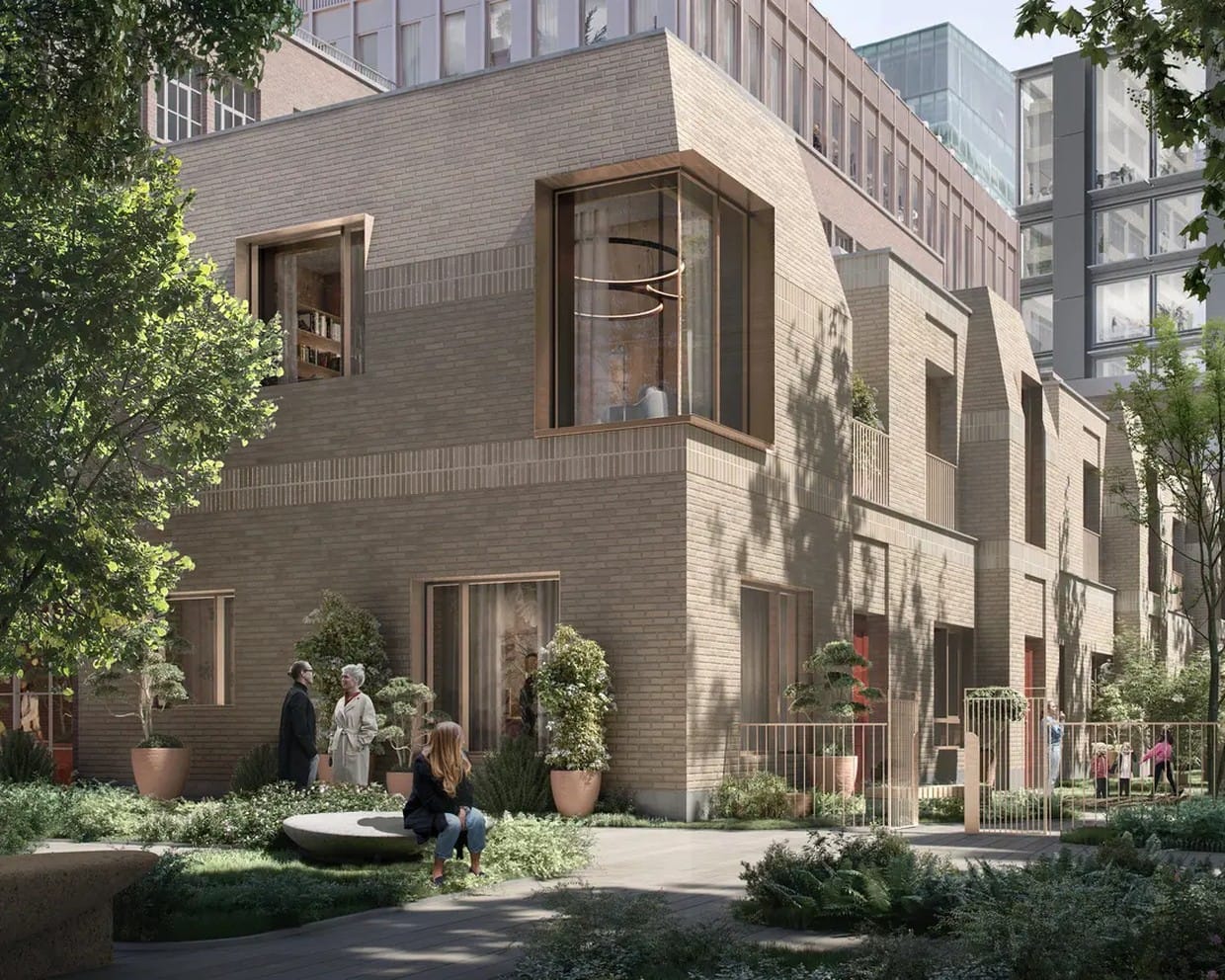
As approved, Shoreditch Works would provide 35 per cent affordable housing. Under the draft agreement, if Linea fails to make substantial progress on construction within 30 months of permission being granted, the scheme’s finances must be reassessed. Any surplus profit must then first fund additional affordable homes on-site – up to Hackney’s 50 per cent target – with any leftover balance paid to the council for affordable housing elsewhere in the borough.
The agreement also secures 2,248 square metres of affordable workspace – the same floorspace the developer offered Hackney, minus the community ‘Urban Room’, which City Hall did not count. Rents across the affordable workspace must average no more than 40 per cent of the market rate, although individual office and co-working units can be let at up to 80 per cent.
Hackney Council had opposed that averaging approach, but Pipe backed it, saying it “will give the opportunity for a broader range of businesses and organisations to occupy the space”. The affordable workspace amounts to 5.2 per cent of the scheme’s office floorspace, but Pipe said: “Having carefully considered the viability position, [I] accept that this is the maximum affordable workspace this scheme can viably provide.”
Height and heritage
The Verso tower, described by Linea’s own planning documents as 19 storeys, was deemed “obtrusive” and too tall by officers. A storey of plant and a cantilevered section were removed in late 2025, before the council’s February meeting, leaving the tower at 18 storeys.
Council officers also regretted the demolition of almost all the site’s unlisted post-war buildings – former industrial premises now used as low-cost workspace – describing the loss of this “interesting layer of industrial history” as “unfortunate”, although they acknowledged the case for keeping any individual building was weak.
Late delivery
Restoration of the site’s listed buildings – the Grade II* Philip Webb terrace and Grade II 103-105 Worship Street – is scheduled for the final phases of the project, along with the homes, raising doubts over whether the pledge would stick if financial conditions worsened later on. Under the draft agreement, Linea could not occupy more than 85 per cent of the newly built commercial floorspace until the listed building works are complete and all the homes are ready.
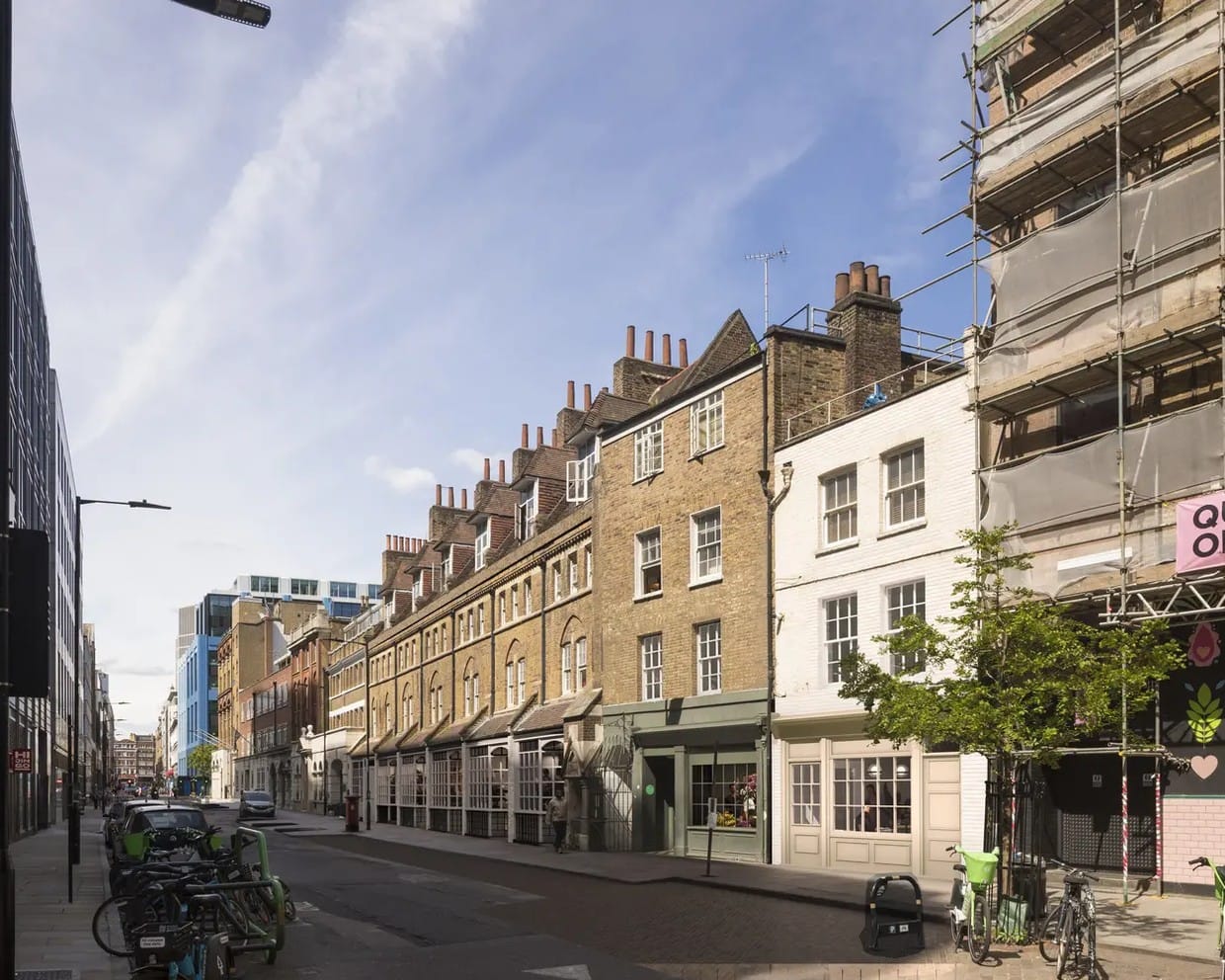
Addressing the timing of the homes, affordable housing, heritage restoration and public realm, Pipe said: “I acknowledge Hackney’s concerns about the delivery of these late in the development programme. I do, however, recognise the constraints of bringing forward this complex scheme on a tight urban site.”
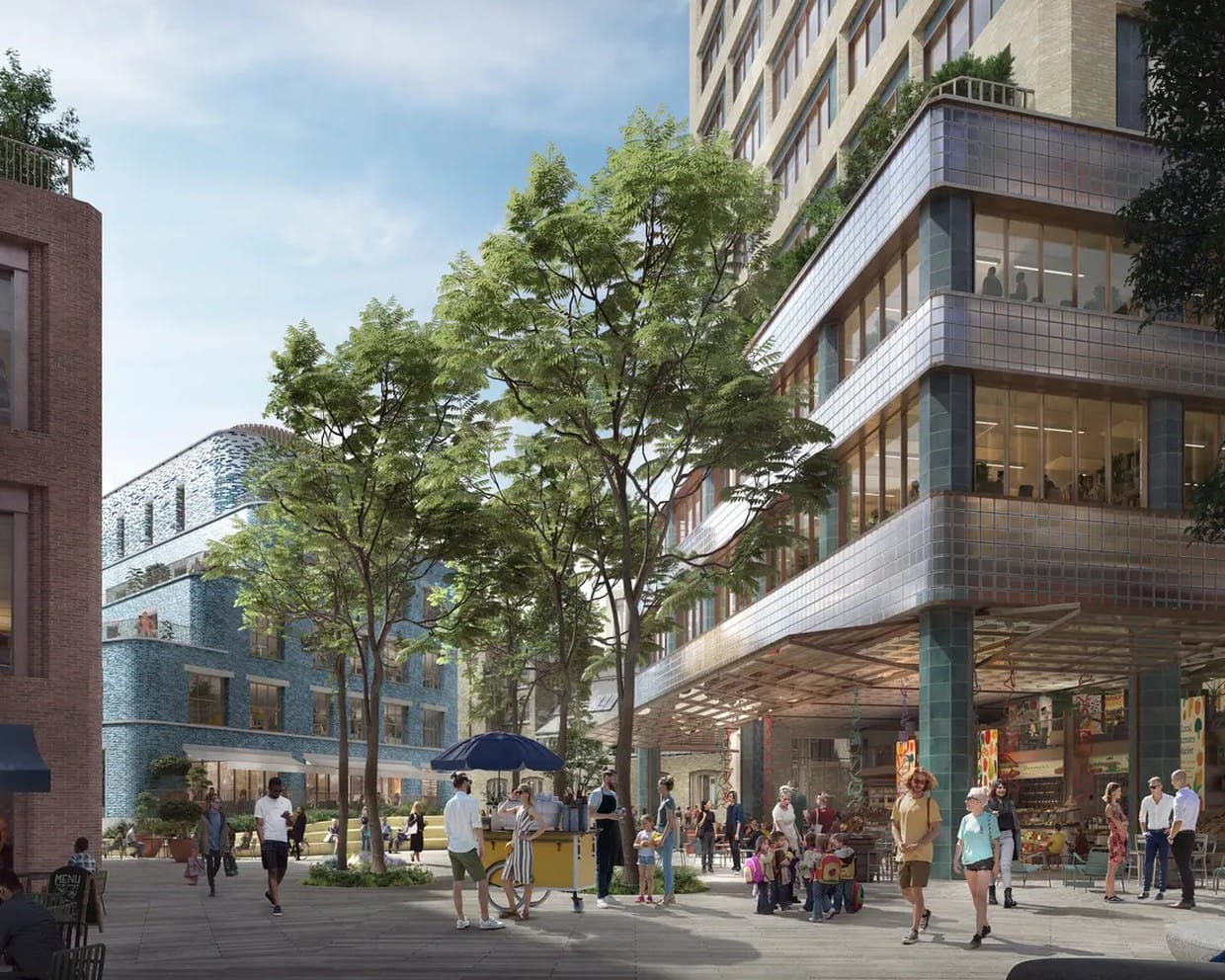
Shoreditch Works is also set to include a central open-air courtyard and new pedestrian routes open 24/7, although the developer’s own consultants found significant daylight and sunlight losses at eight neighbouring properties on Curtain Road and Holywell Row.
Planning permission will not be formally issued until the legal agreement is signed, with City Hall setting a deadline of 21 January 2027. An exact start date for construction is yet to be announced.
With additional reporting by Hackney Citizen.
Find out more on these topics


Comments