

Hackney’s Green administration has dropped its opposition to the £1.5bn rebuild of the Edmonton incinerator, a project the council now says will cost it millions more than it expected earlier this year.
Ahead of May’s local elections, Hackney Green party pledged in its manifesto to “explore every option to cancel” the reconstruction of the ageing plant, which burns rubbish from seven north London boroughs.
But after taking control of the Town Hall, the new administration now says abandoning the project would be financially and environmentally “devastating”.
The decision comes as an official report shows the new plant was only 60 per cent complete as its original handover date approached, and as Hackney’s payments for waste disposal are forecast to rise by almost 15 per cent next year.
“Devastating”
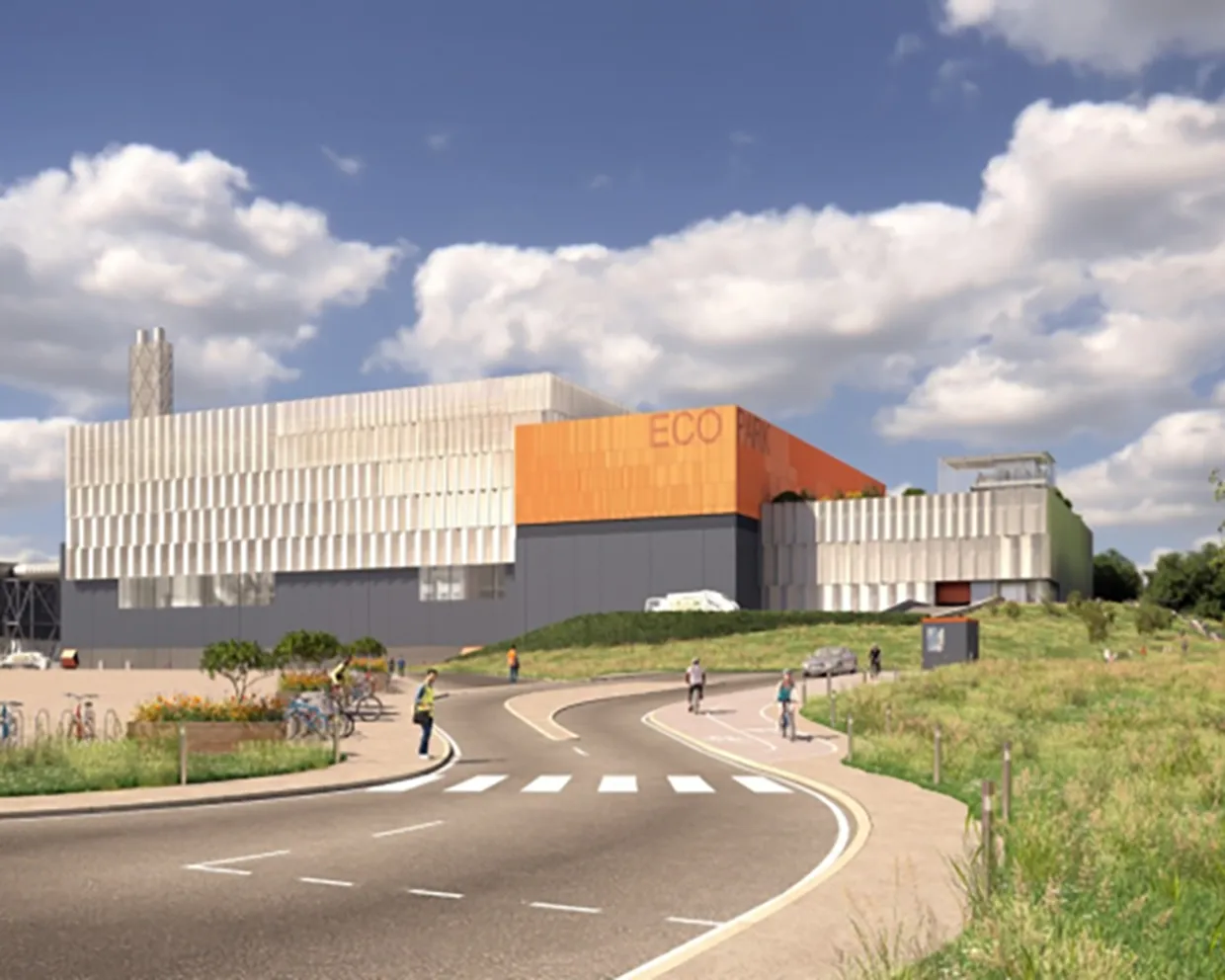
Hackney is one of seven councils belonging to the North London Waste Authority (NLWA), the statutory body building the new plant, officially known as an Energy Recovery Facility (ERF). It is going up next to the existing incinerator, which has burned north London’s waste since 1971.
The rebuild, which began in 2022, has been opposed for years by campaigners including Extinction Rebellion, Greenpeace and Friends of the Earth over its potential air pollution and carbon emissions. The campaign group Stop Edmonton Incinerator Now has also argued it could discourage recycling.
In 2024, Hackney’s then Labour administration defended the scheme after a BBC investigation found burning rubbish was the UK’s “dirtiest form of power”. The council’s then climate chief, Cllr Sarah Young, said at the time that the incinerator was “currently the least environmentally damaging way to manage non-recyclable waste”.
The borough’s new cabinet member for climate, clean air, energy and transport, Cllr Jacob Cable, who is also chair of the NLWA, told the Local Democracy Reporting Service (LDRS) it was “clear” that failure to complete the project would be “devastating both financially for the seven constituent boroughs”.
Cllr Cable added that cancelling the rebuild would “also massively worsen environmental and operational outcomes, as we would have to pay to transport our waste to lower performing incinerators than that which is being built”.
He came to this view after commissioning a review of the “costs and risks associated with not completing the project”.
Rising costs
The council told the LDRS the total multi-year construction budget for the plant had risen by 80 per cent. A recent £9m increase in Hackney’s budget gap, now forecast to top £21m by 2030, reflects the council’s contribution to the rising cost, a spokesperson added. The financial plan agreed in March put the gap at £10.2m by 2029/30.
It is not clear what the 80 per cent figure is measured against. In March 2025, NLWA said in response to a freedom of information request that the incinerator would cost £868m, within an overall project budget of between £1.42bn and £1.52bn. Its budget papers in February this year still gave £1.52bn as the best estimate, noting that it was being reviewed because of delays.
The construction contract with Spanish firm Acciona, the only bidder, was worth £799.3m when it was awarded in January 2022, according to the government’s Contracts Finder notice.
As recently as March 2023, NLWA said in response to another freedom of information request that it expected no increases to the budget and that the project was on schedule.
Cllr Cable said he had asked the government for more money towards the rebuild “to shield local taxpayers from bearing the brunt”. He added that he had ensured the waste authority had “negotiated a revised financial settlement to increase delivery and cost certainty”. The details will go to the NLWA board for approval in November.
Who carries the risk
NLWA chose a fixed-price, “lump sum” contract for the plant to secure price certainty. But papers from December 2021, when the contract was awarded, show the authority agreed to carry several key risks itself.
These included inflation “for the full contract period”, with prices fixed in October 2021, shortly before inflation surged in 2022.
NLWA also kept the risk of “unknown ground conditions” on the industrial site. It has since blamed rising costs partly on the discovery of asbestos, unmapped water pipes and a sewer diversion that turned out “more complex than planned”.
Under the contract, compensation from Acciona for delay was set at £100 per tonne and, apart from terminating the contract, is the authority’s only remedy for late completion, according to the 2021 papers.
The same papers show Acciona’s final bid scored 36 out of 100 in NLWA’s evaluation, with 21 areas scored two or below, and that the firm had not finalised its supply chain. Problems recruiting specialist mechanical and electrical subcontractors have since been blamed for much of the delay.
Behind schedule
A report to NLWA’s programme committee on 10 September said the plant was 60 per cent complete, with installation of its two boilers on the “critical path”. The report gave no completion date or updated cost.
NLWA said in March 2025 that the contract’s target date for handing over the plant was October 2026. According to the project’s website, the incinerator is now slated to enter its commissioning phase in 2027.
The project has been hit by spiralling construction costs amid high interest rates and supply chain friction. NLWA has also cited “unforeseen complications for working on an old industrial site”.
Meanwhile, the authority is paying LondonEnergy, the company that runs the existing plant, an extra £7m a year to keep it going until its replacement is ready.
Bills going up
Hackney residents currently pay around £1 per person per week for all their rubbish and recycling to be processed and disposed of, the council said. Once the new incinerator is running, this will rise to roughly £1.50.
NLWA’s own forecasts show Hackney’s levy, its main payment to the authority, rising from £10.67m this year to £12.27m in 2027/28, an increase of 14.9 per cent. This year’s bill was held down using £13.5m of government packaging funding and £4.6m of leftover balances.
When the contract was awarded in 2021, NLWA forecast that boroughs’ bills would jump in 2027/28 as repayments on borrowing for the new plant began, putting Hackney’s levy that year at around £11.5m. Those repayments will now not start until a year after the plant opens, yet Hackney still faces a bigger rise.
The council’s latest three-year financial plan does not reveal its specific spend on the NLWA levy. Instead, this cost is folded into a broader “levies” budget, along with the borough’s contributions to the London Pension Fund and concessionary travel. Hackney expects levies spending to reach £40m by the end of the decade, a 30 per cent increase on the figure forecast in March.
The council’s contribution comes from its general revenue budget, which is funded by council tax, business rates and government grants. Its cumulative deficit is mainly being driven by adult social care, staff pay rises, and capital charges and borrowing.
Bigger than north London needs?
The new plant will be able to burn up to 700,000 tonnes of rubbish a year. North London produced 559,038 tonnes of residual waste in 2025/26, down 22,466 tonnes on the previous year.
NLWA’s 2021 business case said the plant could run as low as 490,000 tonnes, but warned that operating below full capacity would be more expensive, partly through “the loss of third-party gate fees” for burning other organisations’ waste.
The council advises that residents can help cut costs by “producing less waste, recycling more, and using their food waste services”. “We will continue to help them do just that,” a spokesperson added.
NLWA forecasts that Hackney will send slightly more residual waste in 2026/27 than the year before, 86,660 tonnes, while the total across the seven boroughs falls by 1 per cent. Hackney’s forecast food waste, 4,414 tonnes, is well below Waltham Forest’s 7,100 tonnes.
Carbon charge shelved
The project has avoided one further cost pressure, for now. In August, the government shelved plans to bring waste incineration into the UK Emissions Trading Scheme from 2028 and has yet to set a new date.
NLWA has estimated the charge could cost north London’s boroughs between £14m and £35m a year, depending on carbon prices. Its financial strategy published in January put the potential pressure at more than £25m a year. That cost was not included in its forecasts.
The entire budget for the North London Heat and Power Project, including the incinerator, new recycling facilities and EcoPark House at the Edmonton site, was estimated at £1.2bn in 2019. Updated forecasts put the total cost at up to £1.52bn.
With additional reporting by Hackney Citizen
Find out more on these topics


