

The old saying “When America sneezes, the rest of the world catches a cold” has never been truer – politically, economically and now theatrically. Though with Eugene O’Neill’s 1924 play, I would upgrade it to pneumonia for our tiny island.
Banned for 16 years in the UK, this story of rural greed, sexual manipulation, incest and infanticide has its roots in Greek dramas such as Phaedra and Medea. Ebenezer Bamgboye’s direction makes the piece his own, changing so much it is almost unrecognisable, and not always for the best.
Ghosts in the shadows
Music is added, varying the incessant O’Neillian monologues. Choolwe Laina Muntanga plays a restless spirit (the farm’s former lady), sitting on stage during the pre-set in a faded greyish frock, gazing dead-eyed out at the audience as we bustle in. She kicks things off with a haunting rendition of 'The House of the Rising Sun', and her explosions of soulful song are heartrending.
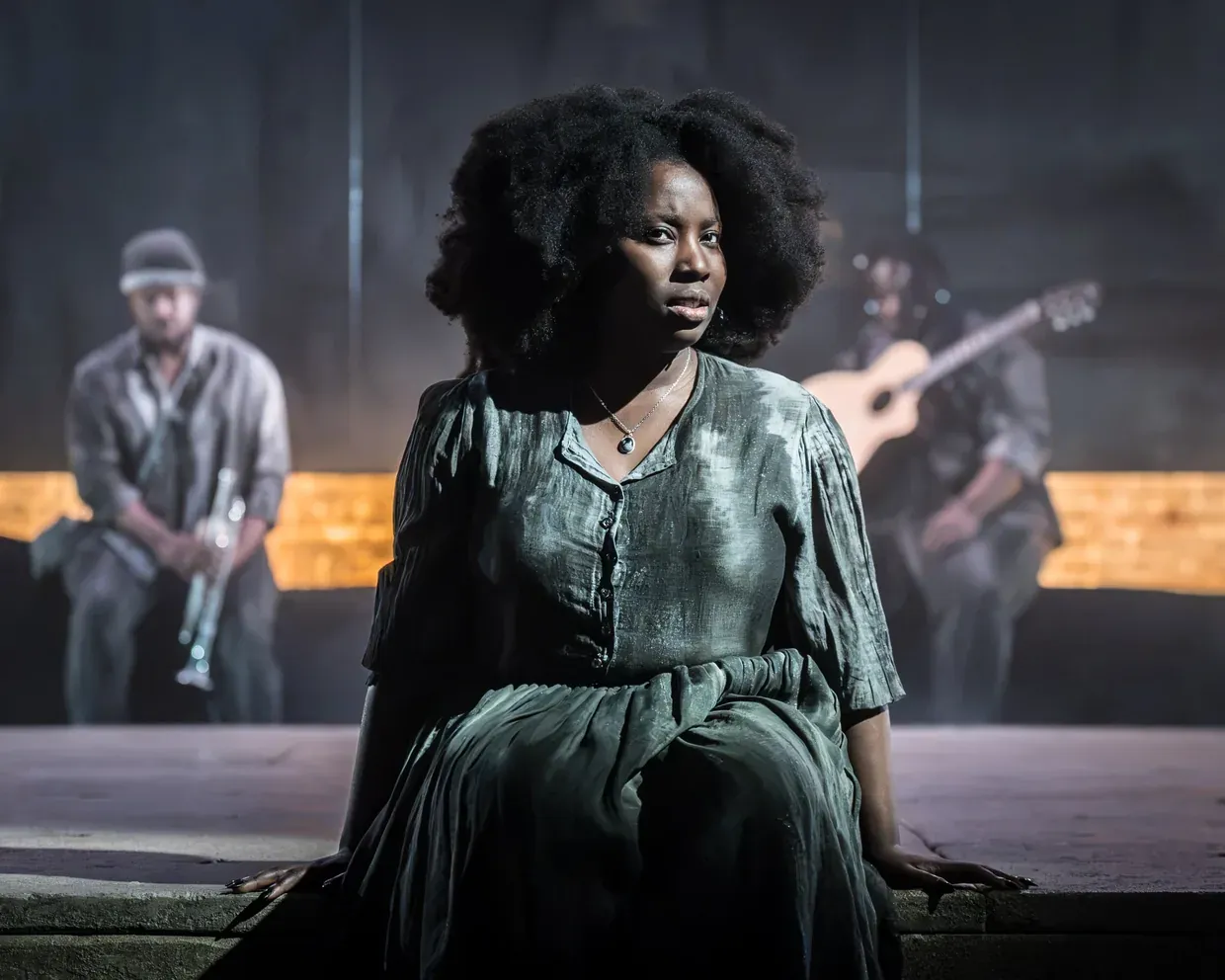
Tendai Humphrey Sitima on guitar and Nathaniel Wade on trumpet stalk the shadows of Basia Bińkowska’s minimal polished-wood set. Reflective floors at the sides let ripples play across the three musicians as they inform – and puppeteer through sound – the action on stage. Their costumes grow increasingly undead as they leap on and off stage, playing extra characters or simply harassing the named roles.
Rose Ryan’s movement and intimacy work has characters colliding in heightened, experimental dances more at home at Sadler’s Wells than the Almeida. Although jarring at first, the choreography is refreshing and breaks up the words, words, words.
Dressed like a crow
Yet it’s not just the blocking that’s taken to extremes. Kelly Gough’s Abbie is a stalking, demonic interpretation. Dressed like a crow, she winds and extends her arms in the most unnatural way, snarling, gurning and grimacing something frightful.
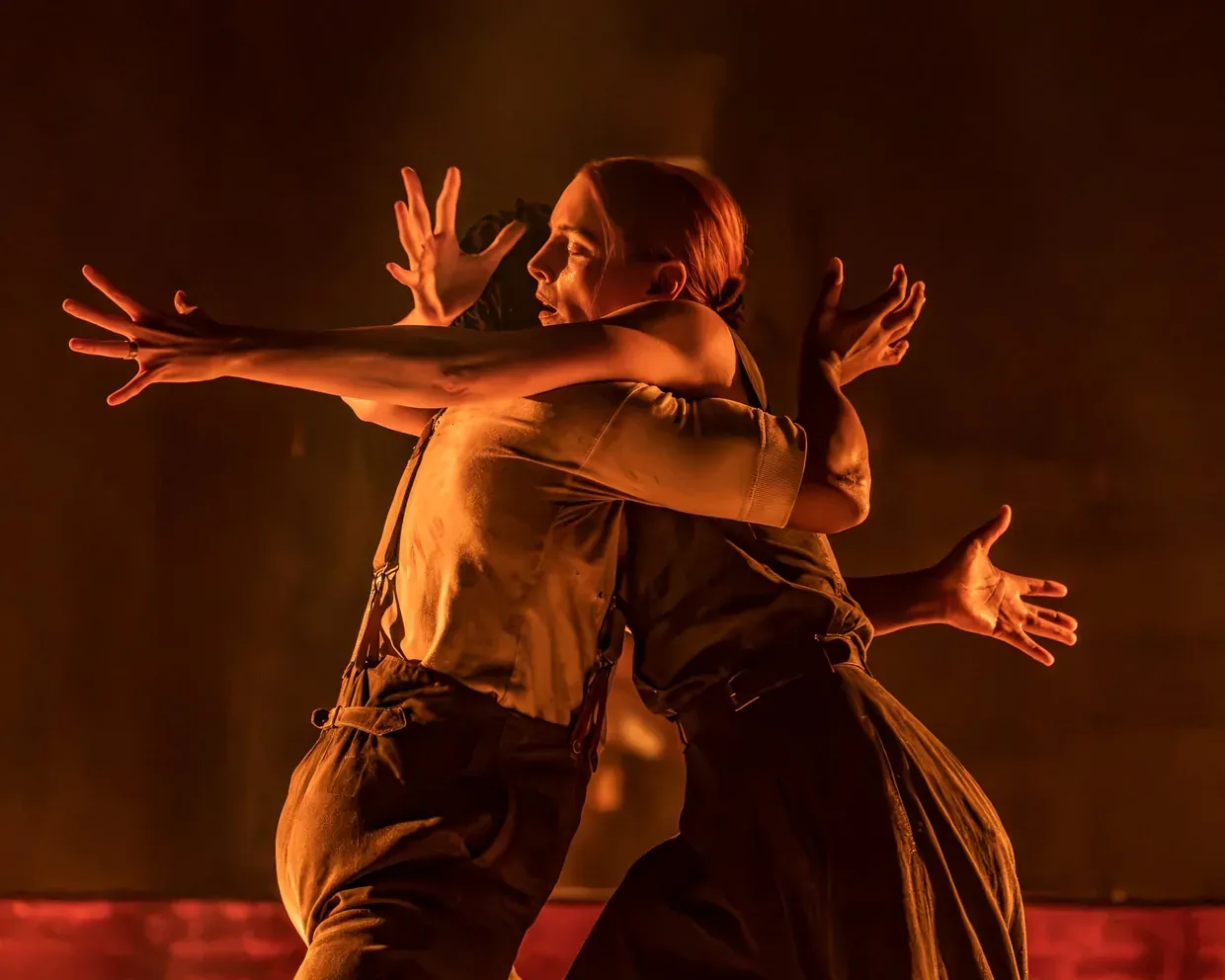
Her intrusion into the unhappy farm life of her new husband, Ephraim (a glowering Antony Byrne), and her resentful yet alluring stepson, Eben (a multifaceted Zackary Momoh) sets all three on a rollercoaster ride of inevitable misery, until the blood-slicked, smoke-choked, suffocating end.
Down to Louisiana
Bamgboye shifts the play from the 1850s to the 1900s, and from rural New England to the deep, sweatin’ Louisiana South. Adding actors of colour as the musicians and dancing hoodoo spirits reinvents the story, bringing a new angle on ownership.
Casting Eben as a Black man turns his father’s harsh management of the farm into that of a plantation owner, yet it tests the audience’s suspension of disbelief, as the question of the paternity of Abbie’s ill-fated baby (Eben or Ephraim?) no longer makes sense.
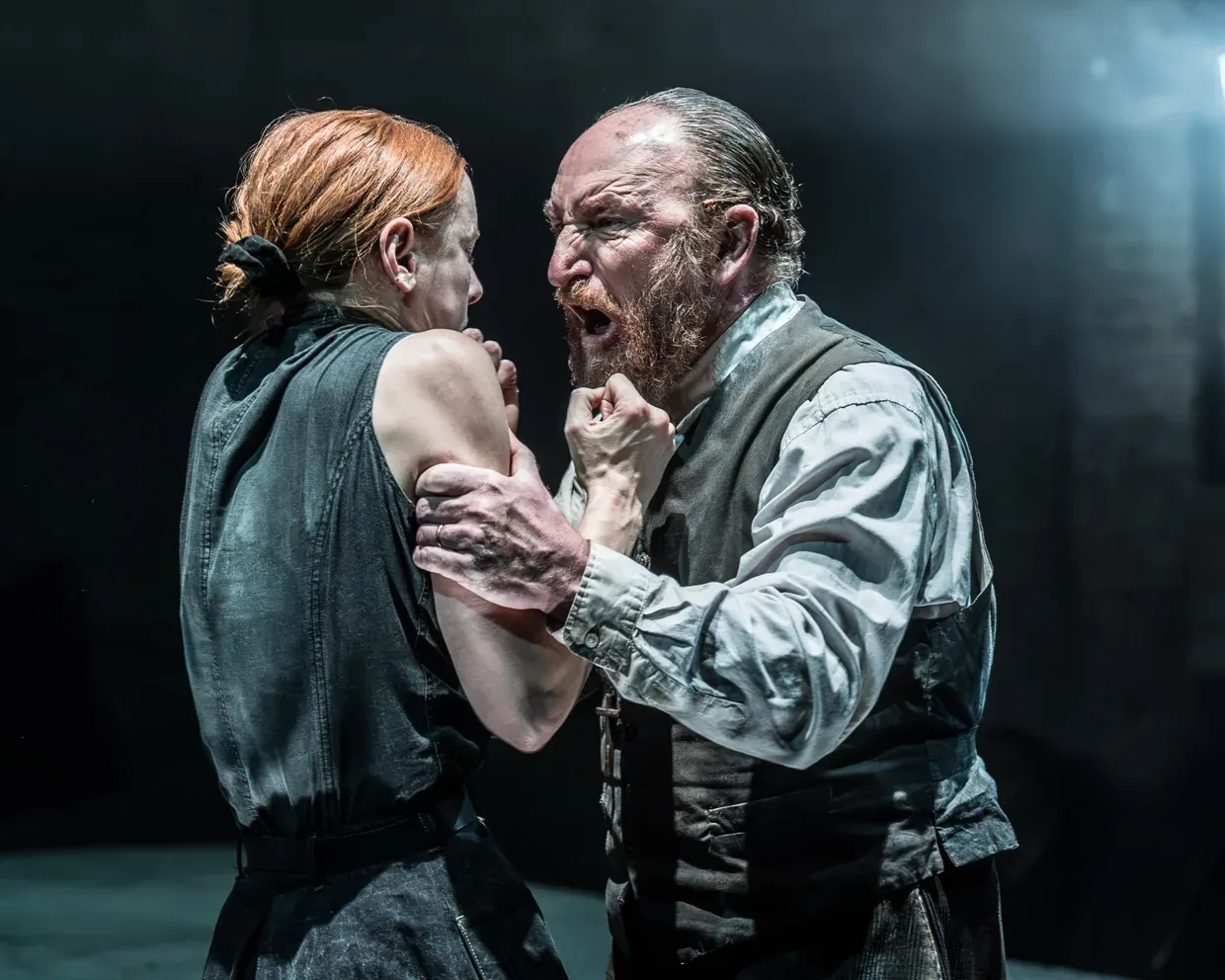
Everything tips towards horror and the grotesque, at times obscuring the poetic if unrelenting dialogue. The collision of poisonous and hateful individuals is taken to such a cartoonish place that it is impossible to empathise. As Abbie leans over a light shining up from her child’s cot, screaming “MAA FARMMM”, she looks barely human. Maybe that’s the point: that greed takes away our humanity?
But by the end my brain is so bruised I can’t even think; a long bath and blessed silence are all I can look forward to.
Desire Under the Elms runs until 23 December at the Almeida Theatre, London, N1 1TA. For more information, visit almeida.co.uk.
Find out more on these topics


