

Market traders have hit out at Hackney Council’s plans for new traffic controls in Dalston, and some vendors warn they could be forced out of business.
In October the council put its proposals for a ‘Liveable Neighbourhood’ in Dalston out for final, statutory consultation, in a bid to curb “dangerous” traffic levels on residential roads. That consultation closed on 4 November. The council says it will consider objections before making a final decision.
The measures include new School Streets, a 24-hour bus gate on Shacklewell Lane and new pedestrian crossings. The council says the scheme will be financed by nearly £3 million in Transport for London (TfL) funding. However, the officers’ report approving it in February said only £148,000 had been confirmed by TfL, with a further £2 million requested over the following two years.
The scheme is intended to stop vehicles using residential roads as shortcuts, otherwise known as “rat running”, and to make roads safer. The council’s February report, which analysed police collision data for the five years from 2020 to 2024, found that nearly six in ten people injured on roads inside the scheme area were cyclists or pedestrians.
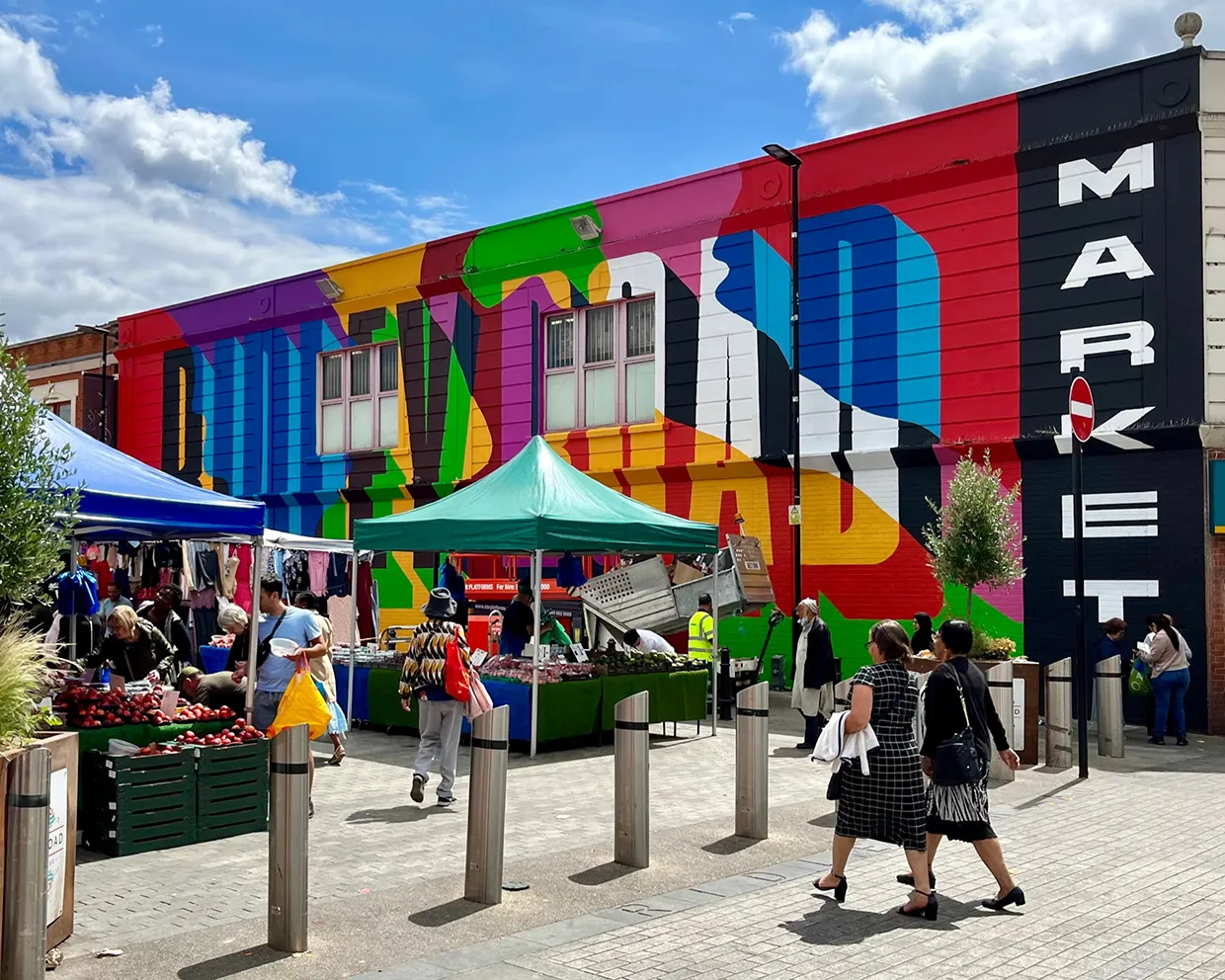
But traders at Ridley Road market, which has been open since the late 1880s, say the restrictions will hurt their livelihoods and cause more congestion and pollution.
“We’re already on the ropes, and we don’t need any more thorns in our side,” said fruit and vegetable seller Jimmy Edwards. “We’re happy to see bike lanes put in, but don’t cut our legs off to get to work.”
Left turn
The measure causing uproar among traders is a ban on vehicles turning left out of Ridley Road onto Dalston Lane. The council says this is to stop the market street becoming a cut-through between the A10 and Pembury Circus. In a public consultation last summer, 45 per cent of the 1,047 people who answered the question opposed the ban, and 44 per cent backed it.
Edwards told the Local Democracy Reporting Service (LDRS) the restriction would cut off traders’ usual delivery routes and force them onto already congested thoroughfares on Dalston Lane and Graham Road.
The London Ambulance Service raised a similar concern when it objected to the ban. It warned that crews taking patients to Homerton Hospital would be pushed onto Graham Road, which would increase journey times and “reduce overall ambulance availability locally to respond to 999 calls”. The council has kept the ban, saying emergency vehicles will be exempt.
Edwards said the changes would also mean fruit and veg traders like him face lengthy detours to the wholesale market at New Spitalfields in Leyton. Being able to get there late had long given Ridley Road traders a competitive advantage over other markets.
“We’ve got an angle in the market where we can go late to Spitalfields and get better deals, which provide for the local community,” Edwards said. “I really do think there’s a potential it could shut down Ridley Road trade completely.”
He added that regular customers who buy wholesale from Ridley Road still rely on cars to come and collect heavy goods. “You can’t get 20 boxes of oranges and 10 boxes of bananas on a push bike,” Edwards said.
Customers
Other traders echoed these fears and questioned the logic of the proposals, since they would still rely on motor vehicles to bring supplies to the market. Abdul Turkmani, who has run his stall since 2001, said: “How are you going to reduce pollution if instead of me driving for [a few] miles, you are making me drive an extra 10 miles?”
A council survey of 102 visitors to the market, carried out over two afternoons in May 2025, found that nine had arrived by car or taxi. Most of the rest came by bus or on foot. But Abdul Alizadeh, who has sold rugs at Ridley Road for 15 years, argues that the restrictions would mean customers coming from outside the borough would simply “go elsewhere”.
“It’s not sensible at all, it’s just more pressure on traders, more difficulty for all of us. We’re going to lose more customers,” he told the LDRS.
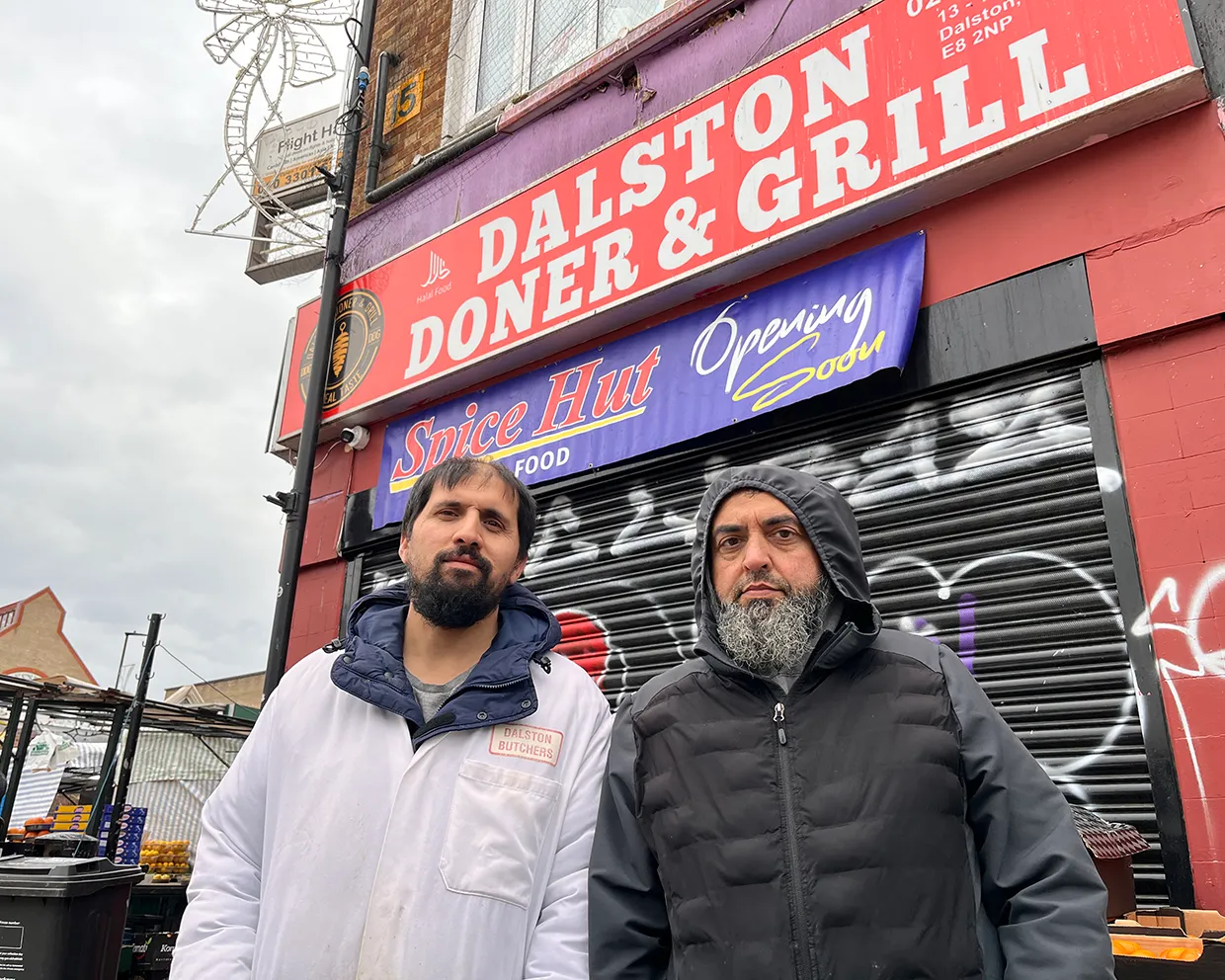
Fishmonger Sikander Akram, 52, said he has traded at the market for 30 years, but now fears the restrictions will force him to give up his stall. “I don’t know how to do anything else,” he said.
Consultation
Akram and others criticised the council’s reliance on online consultations rather than door-to-door outreach and public notices. They pointed out that many long-standing traders have limited digital literacy or do not speak English as their first language.
However, the council said face-to-face engagement had long been “integral” to its approach, and that trader feedback had already influenced the Liveable Neighbourhood’s design.
The council told the LDRS that one example was officers’ decision to scrap proposed works at another junction, St Mark’s Rise, after traders said it was crucial for loading and unloading.

The council said officers had also set up a pop-up stand at Ridley Road and held four in-person drop-in sessions at Dalston CLR James Library during the first consultation period. They also distributed paper survey booklets with Freepost return envelopes. A travel survey of market traders in 2023 drew 34 responses. Notices of the October consultation were posted on lamp columns and published in a local newspaper and the London Gazette. The council says a leaflet setting out the plans was also sent to residents and businesses in the scheme area.
Road safety
Jacob Cable, the council’s cabinet member for climate, clean air, energy and transport, said: “Every existing road accessing the market will remain open and fully accessible.”
Cllr Cable added that no final decision had been made and that the council welcomed feedback from local residents, businesses and traders. Officers approved the scheme in February, subject to the statutory consultation. The traffic orders will only be made once objections have been considered.
“What has been lost in this debate around roads is the problem we are addressing,” Cllr Cable said. He said the area had seen 99 road traffic collisions in the last year, 60 of them involving pedestrians or cyclists. The collision data published in the council’s report covers 2020 to 2024 and does not include a figure for a single year. The council has been asked for the source of Cllr Cable’s figures.
The council said it would “actively consider tailored exemptions and access arrangements beside the market at specific times of day to support loading and operations”.
Find out more on these topics


