

I’ve read some terrifying articles recently about species dying out.
According to the New York Times, in a piece gently titled ‘The Insect Apocalypse is Here’, the number of flying insects in parts of Europe has decreased by 75 per cent over 27 years.
Half of all farmland birds in Europe have disappeared in three decades.
You may also have noticed that there are no squashed insects on car windscreens or moths fluttering around lights any more.
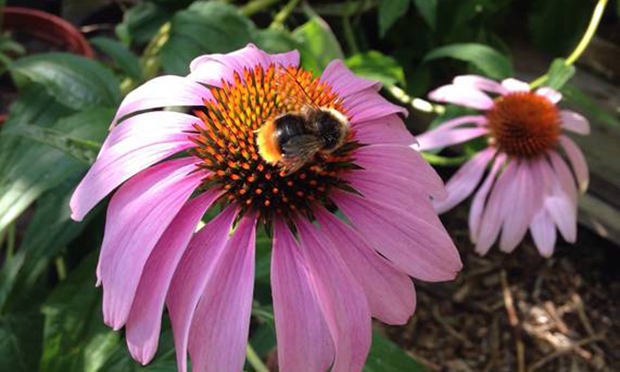
For many this will be a relief; most people don’t like insects and wonder why this matters – especially when invertebrates make up the majority of life on Earth.
People like leopards, meerkats and badgers.
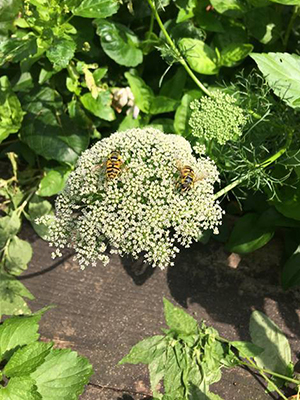
But, to oversimplify a complex system, without insects providing food for the birds, which provide food for the mammals, everything declines.
Not only that, but insects (not just bees), of course, pollinate most crops.
Insects are keeping the whole lot of us going.
One reaction to this bad news is to just despair: how can we possibly reverse such an awful catastrophe? It’s too big and too late.
The other response is to get involved with something like 10xGreener which says we can all do something – or even nothing – and make things better.
The main reasons for the decline of insects are the use of herbicides and insecticides, lack of food (nectar from a variety of flowers) and lack of habitat.
We can do something (or nothing) about all of these things.
Do nothing:
- Don’t kill bugs: don’t use pesticides or herbicides. We just have to get used to ‘weeds’ (otherwise known as wild flowers) in our streets and parks.
- Let things grow and allow them to produce nectar and pollen. Cut hedges after they have flowered, let the grass grow long and for daisies and dandelions to flower. Allow ivy and moss to crawl up the wall.
- Don’t tidy – especially in the winter when insects can hibernate in dead flower heads, stalks and piles of rotting wood or bricks.
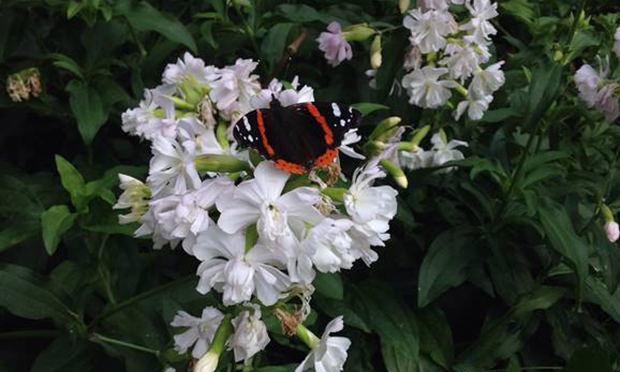
Do something:
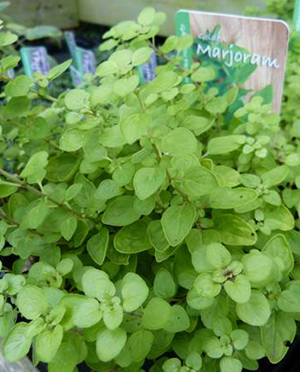
This takes a bit more effort but could be as simple as removing a paving stone and letting nature appear in its place or putting in some lavender or a climbing plant such as honeysuckle.
- If you don’t want to remove paving, you can let plants grow between the cracks and if you don’t want grass in the cracks replace it with creeping thyme, moss, oregano or lawn chamomile. I’ve found that chives and marjoram will seed themselves in crevices and provide lovely (edible) leaves and flowers which are great for bees for months.
- Plant up a pot to provide nectar and a resting spot for passing insects. Avoid bedding plants such as begonias as they are often overbred with too many petals for insects to access the limited pollen or nectar. As a rule of thumb choose simple, open flowers. Try mint, marigolds, alliums (from the onion family), fennel, rosemary, hyssop, borage, sage and other salvias. These can all be grown in pots and are edible, so win-win insects and people.
I’ll be running free monthly 10xGreener gardening sessions over the next year and on 16 February we’ll have a ‘Nature is Smashing’ day when we’ll be pulling up paving and drilling holes to make space for plants and invertebrates in the Daubeney Road area of E5.
Kate Poland is an award-winning community gardener who runs social enterprise Cordwainers Grow. She was also chosen to be the UK’s first ever postcode gardener in E5 as part of Friends of the Earth’s 10xGreener project.
For more information, head to cordwainersgrow.org.uk and friendsoftheearth.uk
Photos and captions courtesy of Kate Poland.
Find out more on these topics


